Character consistency in animation and AI video: from references to shot review
Keep a character's face, clothing, colours and proportions coherent across shots so the results belong to the same character.
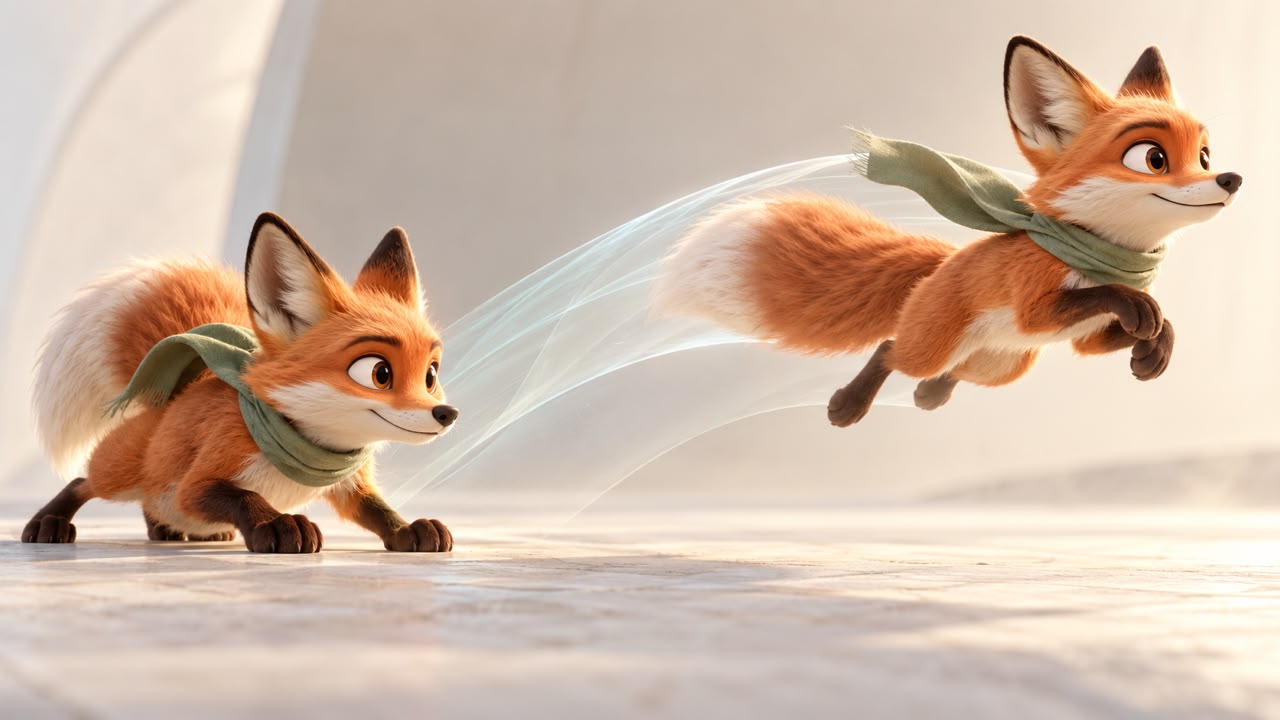
A consistent character is more than a similar face in several images. Body proportions, clothing, movement and reactions all contribute to its identity. Define these before producing a sequence so each shot can be compared against the same reference.
Create a reference that answers questions
Prepare front, side and three-quarter views, along with important close-ups. Identify fixed details: eye shape, facial proportions, colour placement, clothing and accessories. The rules should work with the project's visual identity.
For a hypothetical fox with a green scarf, specify the muzzle shape, tail proportions, scarf knot and eye colour. A new scarf style or changing snout can make it feel like a different character even when the overall palette is similar. Record those details explicitly instead of requesting only “the same fox”.
Test behaviour as well as appearance
A character's posture and response should suit its role. A rig provides controls for animation, but does not define the character's acting. The choice between 2D and 3D animation changes the production process, not the need for a coherent performance.
Before building a long sequence, test a small movement containing a typical expression or action. Check what happens to the face, joints and clothing. A short test can reveal a problem that is difficult to spot in a static character sheet.
Treat generative references as guidance
Reference images and first and last frames can guide generated video. They do not guarantee that the intermediate frames will preserve every detail. Inspect the entire shot, especially transitions, turns and contact with objects.
- Compare hands, face and accessories against the approved reference.
- Check that props keep their size and position.
- Watch for clothing or colour changes during movement.
- Mark the timestamp of each problem when giving feedback.
- Review the shot at normal speed as well as frame by frame.
Maintain continuity between shots
An advertising storyboard records positions, direction and relationships before the final images are made. If a character leaves one shot looking right and enters the next in an unrelated pose, the edit may feel disconnected even if both images look good separately.
During editing and playback review, compare adjacent shots and the sequence as a whole. Keep the approved reference available to everyone reviewing the work.
For a Visionairt consultation, provide the character concept, existing reference views, intended actions and final use. Agree on which details are fixed before extending the character into a full story or campaign.
Sources and review date
Sources reviewed for the original Persian edition: 24 September 2026. Examples and practical checklists are editorial guidance. English edition: 24 September 2026.