AI fashion lookbooks: how to preserve the garment's real details
Prepare product references and review stitching, colour, proportions and collection layout before publishing fashion imagery.
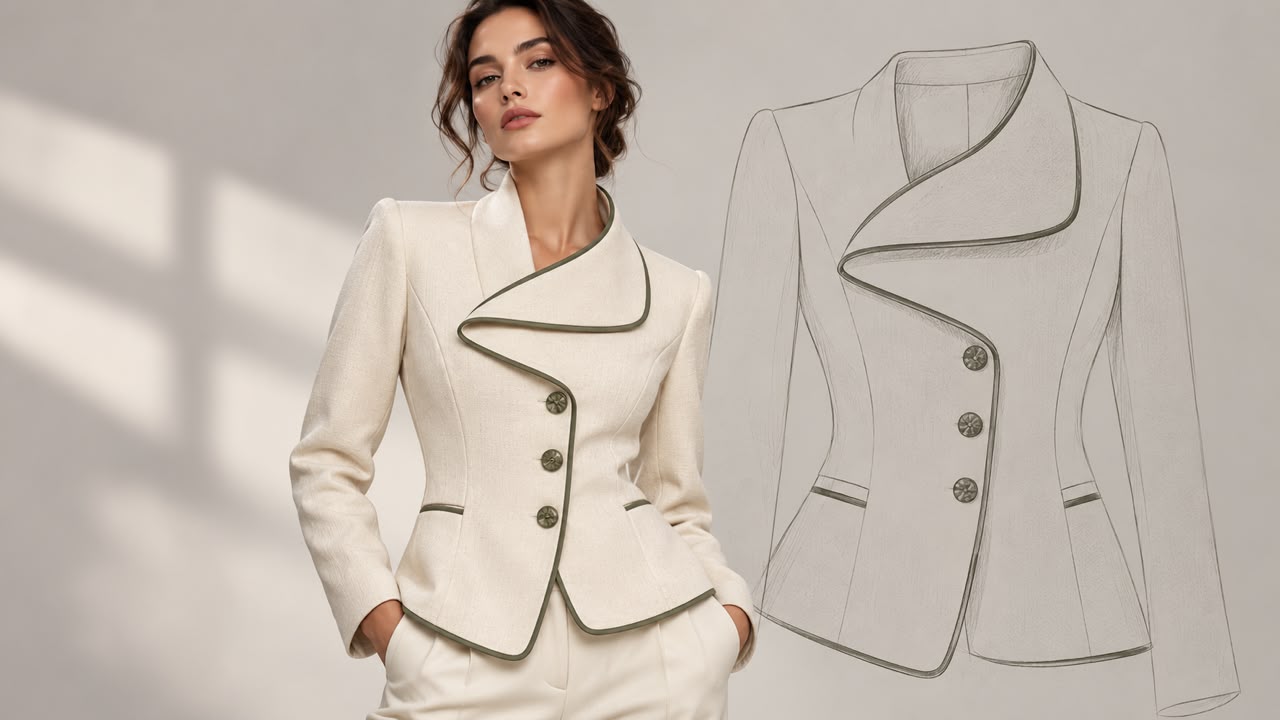
A lookbook introduces garments through a shared visual language. Generative tools can help explore a collection's mood, but an attractive image should not replace fidelity to the clothing. For an existing product, viewers should see the neckline, cut and details they will actually receive.
Start with the garment, not the background
Prepare front, back and detail photographs. List the colour, fabric, sleeve length, button count and neckline. “An elegant cream coat” is not enough to preserve product specifications. The guide to product photography or illustration helps identify which images require a real product reference.
For a hypothetical jacket with an asymmetric collar, that collar is a central design feature. If the output replaces it with a conventional one, beautiful lighting does not make the image suitable for an accurate introduction. Check details before choosing the final result.
Set the collection's visual language
Style references in tools such as Firefly guide the appearance and aesthetic of an image. For fashion work, a reference may define light, camera distance or surrounding colours. It should not justify changing the garment itself. Establish consistent visual identity rules before producing many images.
Two or three initial concepts can help decide the setting. Once approved, apply those rules to the rest of the collection. Changing the model, environment and lighting in every image can make the products harder to compare.
Check quality before publishing
- Fabric patterns should continue plausibly across seams and folds.
- Compare buttons, zips, pockets and sleeve edges with the reference.
- Make sure hands or poses do not hide the garment's main features.
- Check the exported colour against the approved reference.
- Do not describe a reconstructed image as documentary product photography.
Lighting and materials are especially important for shiny or textured fabrics. Review the result on a phone too; details visible on a large monitor may disappear in a product card.
Prepare images for their actual use
Do not crop every image identically. A store image, video cover and educational post have different needs. In the social content calendar, identify whether each image explains garment shape, fabric detail or styling.
For a Visionairt fashion consultation, send permitted reference photos, the garment list and intended outputs with a clear brief. Aim for a coherent collection that can be checked against the products. Approve one sample's details before producing the full set.
Sources and review date
Sources reviewed for the original Persian edition: 24 September 2026. Examples and practical checklists are editorial guidance. English edition: 24 September 2026.