AI-assisted jewellery design: from a visual idea to a concept you can review
Use generated imagery to develop jewellery ideas, then check form, dimensions and details before moving towards physical production.
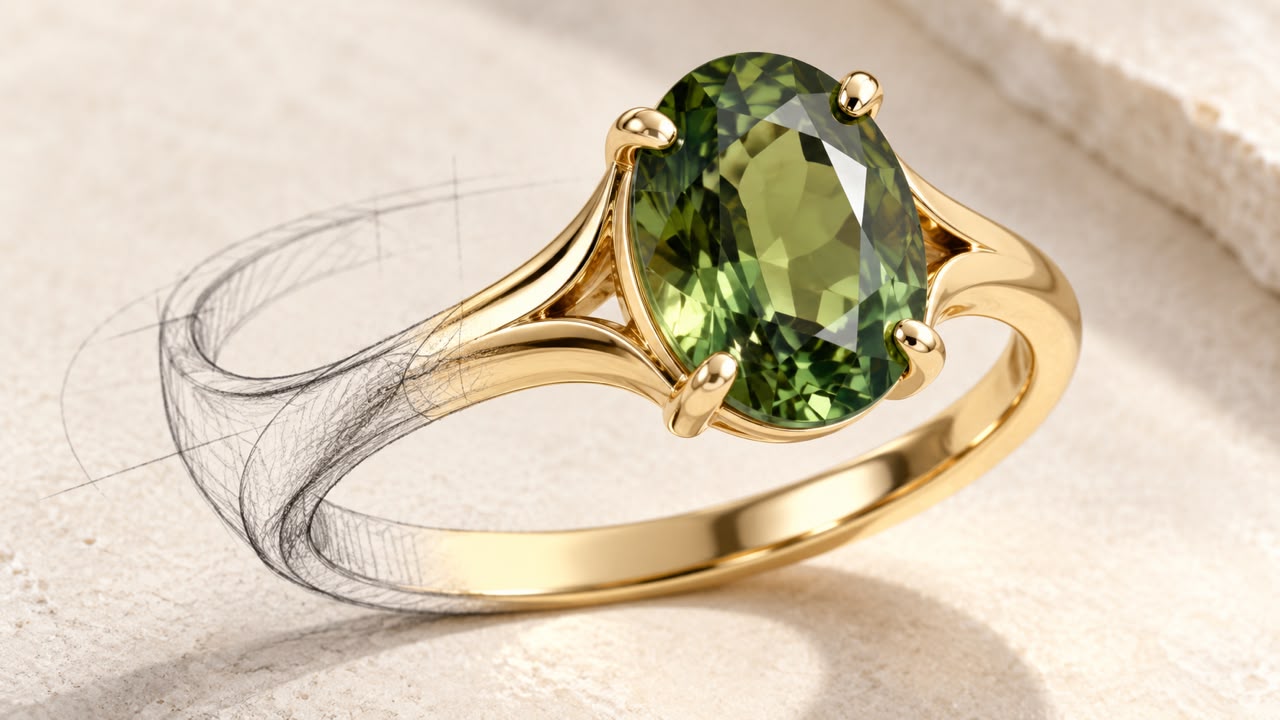
You do not need a complete final image in mind to begin exploring a ring. Generative tools can suggest visual directions, but a sparkling ring image is not a manufacturing drawing. They become more useful when you know what may change and which features must remain fixed.
Make the question smaller
Instead of asking for “a unique ring”, define its purpose: everyday wear, a gift or a statement piece. Describe the stone, overall form, metal colour and visual constraints. These belong in the project brief. Record unknown dimensions as open decisions rather than letting an image imply guessed measurements.
For a hypothetical ring with a green oval stone, compare a simple setting, a twisting band and a geometric frame. Keep the stone shape unchanged so the directions remain comparable. Changing the stone, lighting, angle and band simultaneously makes selection harder.
Style references are not construction references
Firefly's guidance distinguishes style references, which guide appearance, from composition references, which guide visual structure. These controls can make concepts more coherent; they do not guarantee engineering accuracy. Use references you have permission to use and distinguish the output from the original.
Build a small board for metal colour, finish and photographic mood. For a collection, visual identity consistency helps the pieces belong to one family. Limit the options and record why each direction is accepted or rejected.
Check details before the final render
- Do stone shape and count agree across views?
- Are connections and retaining features understandable?
- Is the back designed as well as the front?
- Has a manufacturing specialist reviewed dimensions and thicknesses?
After concept approval, the modeller and manufacturer must review feasibility. An advertising render cannot establish final weight, strength or comfort on its own. The jewellery render checklist helps review the presentation stage.
Choose imagery around its purpose
A render may introduce a future design. An image selling an existing item should represent its real specifications. Clarify that difference when choosing product photography or illustration. Lighting and materials should make form readable; excessive sparkle must not hide design problems.
For a Visionairt jewellery consultation, prepare the intended use, permitted references, stone shape and required outputs. We can clarify what is still a concept and what is ready for visual presentation. Physical manufacturing feasibility needs separate review by the relevant specialist.
Sources and review date
Sources reviewed for the original Persian edition: 24 September 2026. Examples and practical checklists are editorial guidance. English edition: 24 September 2026.