Product photography, rendering or AI imagery: which suits your brand?
Choose an image-production method around the image's purpose and the need to preserve real product specifications.
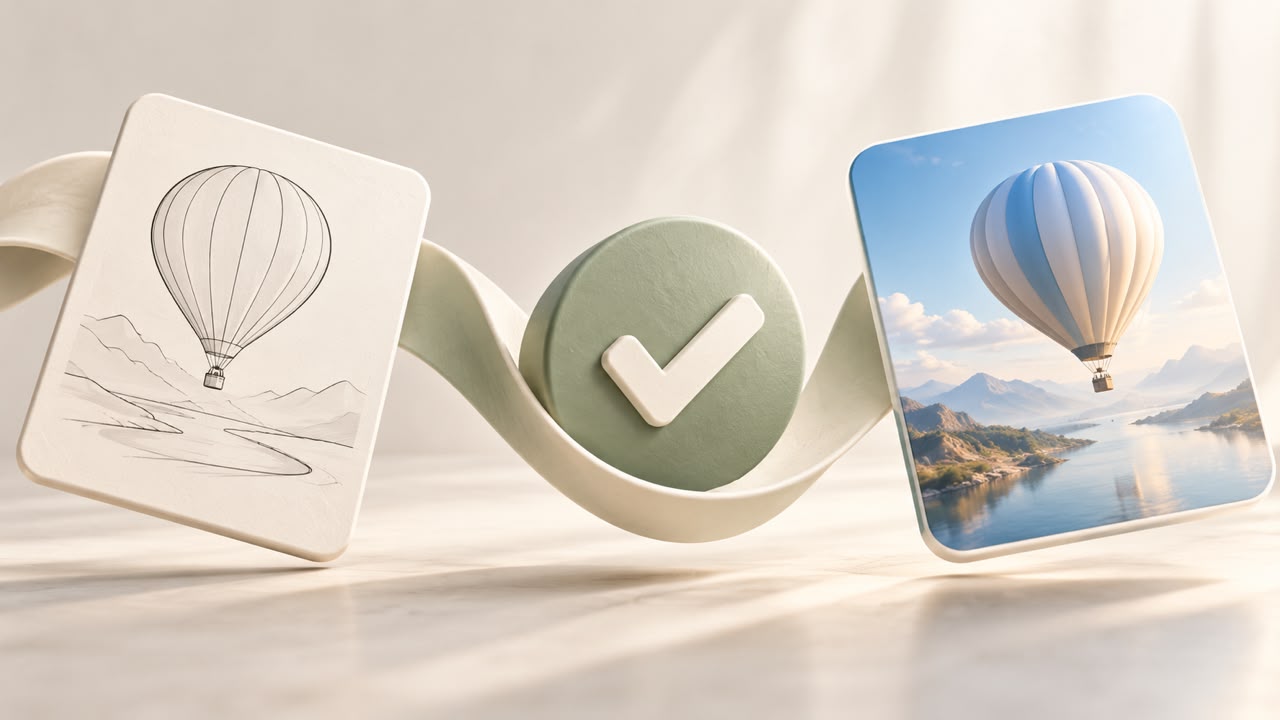
When you need a product image, the first question is not which tool is newest. What should the viewer understand: an existing item's exact shape, how it is used or the mood of a new idea? Photography, rendering and generated imagery can work together, but they do not perform identical jobs.
When is photography appropriate?
If the product exists and details such as texture, stitching, labels or colour differences matter, real photography is a clear starting point. Adobe's product-photography guidance emphasises preparation, lighting and editing. Even a photograph can be misleading if reflections or excessive editing change the product, so it still needs review.
For a perfume bottle, check the lettering and cap shape. A creative background is possible, but establish whether the product itself comes from a photograph or a visual reconstruction. Product lighting matters in both approaches.
What does rendering solve?
A 3D model allows different angles and arrangements to be explored. Rendering is worth considering when photography is not yet possible or a particular viewpoint is needed, provided the model and specifications are reliable. The jewellery render checklist illustrates the checks needed for detailed products.
Rendering an incomplete model does not replace missing information. Approve the basic model shape before final lighting. This separates changes to form from changes to illumination and makes feedback more precise.
Where can AI help?
Reference-guided generation can help explore moods, develop backgrounds and create campaign concepts. Style references guide visual direction, but packaging text, component counts and small details still require human review. Product fidelity also matters in an AI fashion lookbook.
Make the decision in three steps
- List the features that must match the product exactly.
- Define the output: a store image, banner or video.
- Produce one test and write down its approval criteria.
For a hypothetical chair campaign, a straightforward product view should show the shape accurately, while a living-room image may communicate style. Brand consistency rules connect these different images into one campaign.
In the creative brief, record product count, available files, details that cannot change and publishing destinations. A few simple photographs and a needs list are enough to begin a Visionairt consultation. Choose the production method after reviewing the product and its sensitivities; a new tool is not, by itself, a quality standard.
Sources and review date
Sources reviewed for the original Persian edition: 24 September 2026. Examples and practical checklists are editorial guidance. English edition: 24 September 2026.