Visual effects in advertising: when does a composite look natural?
See how motion tracking, perspective, lighting and shadows help added elements belong to the original footage.
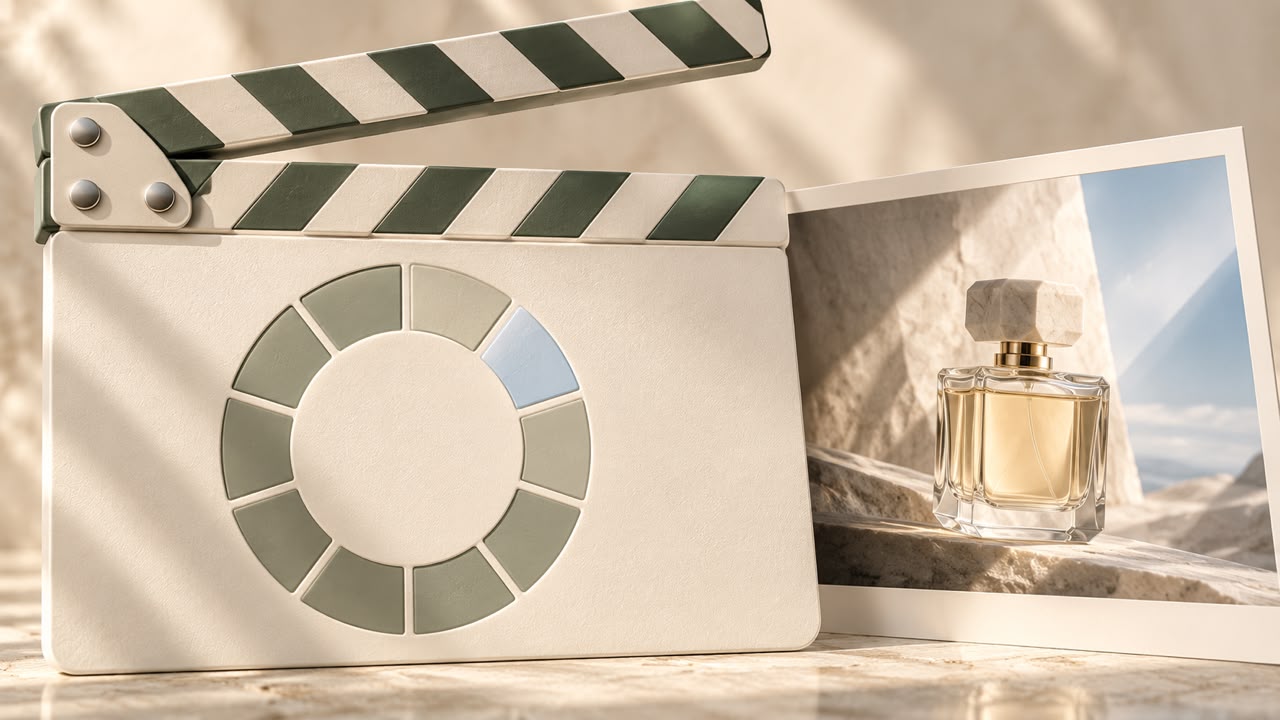
Visual effects can add, remove or change something in an image. The result becomes more believable when the new element follows the scene's existing rules. If the camera moves but an added object slides across the image, even a beautiful model looks detached from its surroundings.
Start with suitable source footage
Compressed or blurry footage makes motion and detail harder to assess. Provide the original file where possible and specify what should change. A project brief with shot timestamps is more actionable than “make this part more interesting”.
Suppose a package needs to appear on a table as the camera approaches. The table's orientation, product scale and camera movement must be understood. If the package does not sit on the surface or lacks a contact shadow, an extra light effect will not solve the underlying problem.
What does tracking do?
After Effects documentation explains that its 3D camera tracker analyses camera motion and scene information from a sequence to support compositing. Results depend on the shot; not every clip suits the same method. Test a short section before committing to the full effect.
A storyboard helps identify shot requirements early. If filming has not happened yet, plan the angle, empty space and camera movement. Addressing a problem before recording is clearer than guessing missing information afterwards.
Match lighting and scale
An added element should agree with the scene's light direction, colour and perspective. Lighting and materials are central to this stage. In an architectural shot, the 3D visualisation should match reliable dimensions and references rather than only a desired mood.
- Inspect contact between the element and surfaces.
- Check edges and translucent areas during movement.
- Compare reflections and shadows with the scene.
- Match grain, sharpness and colour where appropriate.
- Review normal-speed playback and sensitive individual frames.
Judge the shot in context
A shot that works alone may look inconsistent between two others. During final editing, check rhythm and colour continuity across the whole video. Do not present a reconstructed image as evidence of a real event.
For a Visionairt visual-effects consultation, provide the original shot, a result reference and a precise change list. A short test can reveal the file's limitations and a suitable compositing method before full production.
Sources and review date
Sources reviewed for the original Persian edition: 24 September 2026. Examples and practical checklists are editorial guidance. English edition: 24 September 2026.